
TL;DR:
- Effective AI agent management requires real-time monitoring, continuous learning, operational visibility, scalability, and seamless integration.
- Strategies vary from distributed oversight, agent scoring, observability tools, to centralized or decentralized management, each suited to different needs.
- The best approach depends on your workflow complexity, primary goals, team capacity, and ongoing calibration rather than a one-size-fits-all solution.
Scaling AI workflow automation is no longer optional for competitive businesses. Yet most leaders find themselves stuck choosing between management strategies that sound similar on paper but deliver wildly different results in practice. Effective agent management requires dedicated managers overseeing dashboards and scorecards, not just deploying agents and hoping for the best. This article cuts through the noise and gives you a clear framework: the criteria to evaluate strategies, the leading options available in 2026, a side-by-side comparison, and a decision guide tailored to your business size and workflow complexity.
Table of Contents
- Key criteria for effective agent management
- Top agent management strategies for AI workflow automation
- Comparing agent management approaches
- Choosing the right agent management strategy for your business
- Fresh perspective: The missing ingredient in agent management success
- Explore advanced agent management solutions from AgentsBooks
- Frequently asked questions
Key Takeaways
| Point | Details |
|---|---|
| Evaluate key criteria | Use performance monitoring, learning adaptability, and scalability as main criteria when selecting agent management strategies. |
| Compare approaches | Centralized and distributed agent management each offer distinct benefits—choose based on your business size and complexity. |
| Leverage dashboards | Dashboards and scorecards provide essential visibility for agent managers overseeing workflow automation. |
| Customize your strategy | Tailor your agent management approach to context and feedback rather than relying on generic frameworks. |
Key criteria for effective agent management
Before you pick a strategy, you need a reliable lens to evaluate it. Jumping straight to tools without defining your criteria is how organizations end up with expensive, underperforming agent deployments.
The most important criteria fall into five categories:
- Performance monitoring: Can you see what each agent is doing in real time? Dashboards that surface task completion rates, error frequency, and response times are non-negotiable.
- Learning and adaptation: Agents that cannot improve over time become liabilities. Look for strategies that support continuous learning loops and behavioral updates.
- Operational visibility: Observability tools let you trace agent decisions, flag anomalies, and audit outputs. Without them, you are managing blind.
- Scalability: A strategy that works for five agents may collapse at fifty. Evaluate how each approach handles growth across workflows, teams, and platforms.
- Integration depth: Agents must connect cleanly to your existing stack, whether that is email, APIs, cloud services, or messaging platforms. Fragmented integration creates data gaps.
According to agent management research, agent managers monitor performance, learning, and adaptation using dashboards and scorecards to drive continuous improvement. This is not a passive role. It requires active interpretation of data and rapid adjustment.
For organizations pursuing scalable AI deployment, building these criteria into your selection process from day one prevents costly pivots later. The cloud AI management guide also outlines how cloud-native infrastructure amplifies each of these criteria when configured correctly.
Pro Tip: Build a simple scorecard that rates each agent management strategy against these five criteria on a 1 to 5 scale. This turns a subjective choice into a defensible, data-backed decision your leadership team can align on quickly.
Top agent management strategies for AI workflow automation
With your criteria defined, here are the leading strategies business leaders are deploying in 2026.
1. Distributed agent oversight with dashboards Each agent team or workflow cluster gets its own monitoring layer. This approach gives department heads granular visibility without requiring a central bottleneck. It scales well but demands coordination protocols to prevent siloed decision-making.
2. Agent scoring for performance tuning Assign quantitative scores to agent outputs based on accuracy, speed, and task completion. Scores feed directly into retraining cycles, making improvement systematic rather than reactive. This is especially effective for high-volume, repetitive workflows.
3. Observability tools for operational visibility Platforms that log agent reasoning steps, not just outputs, let you catch errors at the source. Think of it as an audit trail for every decision an agent makes. This is critical for regulated industries where explainability matters.
4. Continuous learning loops Agents that receive structured feedback from human reviewers and automated systems improve faster. The key is closing the loop quickly. Feedback that takes weeks to process is nearly useless in fast-moving workflows.
5. Centralized vs. decentralized management Centralized management puts all oversight under one team, which is clean and consistent but can slow response times. Decentralized management pushes authority to workflow owners, which is faster but harder to standardize.
The AI management expertise literature is clear: agent managers who use scorecards and dashboards for continuous improvement outperform those relying on periodic manual reviews. Consistency beats intensity.

Understanding the full range of AI agent benefits helps you match each strategy to the outcomes your business actually needs. And if your agents run on cloud infrastructure, cloud AI automation practices significantly reduce latency and operational overhead.
Pro Tip: For any workflow generating more than $50,000 in monthly value, assign a dedicated agent manager. This single role change routinely produces double-digit performance gains within the first quarter.
Comparing agent management approaches
Now that you know the strategies, here is how they stack up against each other across the metrics that matter most.
| Approach | Adaptability | Scalability | Transparency | Best for |
|---|---|---|---|---|
| Distributed oversight | High | High | Medium | Large enterprises |
| Agent scoring | Medium | High | High | High-volume workflows |
| Observability tools | Medium | Medium | Very high | Regulated industries |
| Continuous learning loops | Very high | Medium | Medium | Dynamic environments |
| Centralized management | Low | Low | High | SMBs and startups |
A few patterns stand out immediately. Observability tools win on transparency but do not scale as effortlessly as distributed oversight. Continuous learning loops offer the highest adaptability but require more infrastructure to sustain at scale.
Key trade-offs to consider:
- Adaptability vs. control: Distributed approaches give agents more autonomy, which accelerates learning but reduces standardization.
- Scalability vs. transparency: Centralized management is easier to audit but creates bottlenecks as agent count grows.
- Speed vs. accuracy: Learning loops prioritize improvement over time, while scoring systems prioritize immediate performance measurement.
"Observability and scorecards are essential tools for agent performance comparison. Organizations that combine both consistently outperform those using either tool in isolation."
A solid AI deployment guide will help you map these trade-offs to your specific infrastructure. For deeper context on why scale changes everything, the AI at scale insights resource is worth reviewing before you finalize your approach.
Choosing the right agent management strategy for your business
Strategy selection is not a one-size-fits-all exercise. Here is a practical process for matching the right approach to your organization.
Step 1: Audit your current workflow complexity Count the number of distinct workflows your agents touch. If it is fewer than ten, centralized management is likely sufficient. More than twenty workflows across multiple departments signals that distributed oversight will serve you better.
Step 2: Define your primary outcome Are you optimizing for speed, accuracy, compliance, or cost reduction? Each outcome maps to a different strategy. Compliance-heavy operations need observability tools. Speed-focused teams benefit most from continuous learning loops.
Step 3: Assess your team's capacity Distributed management requires capable workflow owners in each department. If your organization lacks that, centralized management with a small specialist team is more realistic and will outperform an under-resourced distributed model.
Step 4: Set performance benchmarks before you launch Define what success looks like numerically. Task completion rate above 95%? Error rate below 2%? These benchmarks become your scorecard baseline.
Step 5: Review and adjust quarterly The agent management strategies that work in Q1 may need recalibration by Q3 as agent count and workflow complexity grow. Adaptation and learning are essential in selecting and maintaining your approach.
| Business type | Recommended strategy | Primary tool |
|---|---|---|
| Startup (under 50 employees) | Centralized management | Unified dashboard |
| Mid-market (50 to 500 employees) | Agent scoring plus learning loops | Scorecard system |
| Enterprise (500 plus employees) | Distributed oversight plus observability | Full observability platform |
Exploring AI domain expert operators can accelerate your selection process by showing how specialized agents handle domain-specific workflows. For organizations ready to scale, AI multi-agent teams demonstrate how coordinated agent networks multiply the value of any management strategy you choose.
Pro Tip: Build a simple data table tracking each agent's weekly performance against your benchmarks. Patterns that emerge in the first 30 days almost always predict long-term performance trends.
Fresh perspective: The missing ingredient in agent management success
Most articles on agent management stop at frameworks and tools. Here is what they miss: the single biggest reason agent management strategies fail is not a technology gap. It is a context gap.
Organizations copy frameworks from case studies built in entirely different industries, with different workflow volumes, different risk tolerances, and different team structures. The framework looks right on paper, but it was never designed for their context. It fails quietly, and leaders blame the agents instead of the strategy fit.
We have seen this pattern repeatedly. The organizations that get AI at scale lessons right are the ones that treat their first three months as a calibration period, not a deployment period. They expect the strategy to need adjustment. They build feedback loops between human managers and AI agents from day one, not as an afterthought.
The uncomfortable truth is that no strategy is universally superior. The best strategy is the one your team can actually operate, monitor, and improve consistently over time. Sophistication without execution is just expensive noise.
Pro Tip: Schedule a monthly 30-minute review where your agent manager and workflow owners compare scorecard results. This single habit compounds into significant performance gains over a year.
Explore advanced agent management solutions from AgentsBooks
You now have a clear picture of what effective agent management looks like and which strategies fit your business context. The next step is putting that strategy into motion with tools built for exactly this purpose.
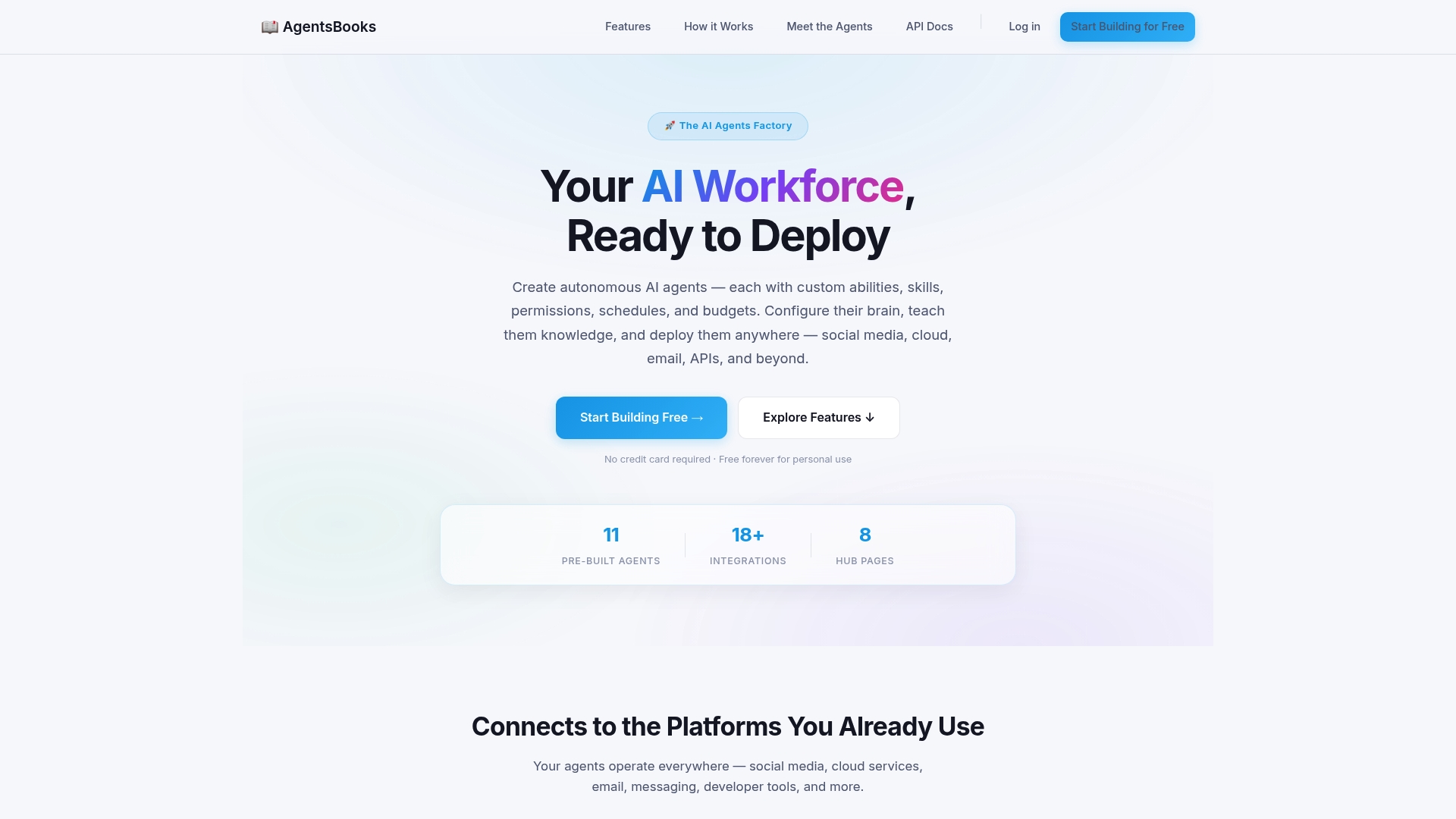
AgentsBooks gives you everything you need to move from strategy to execution. Whether you are building your first agent creation platform or scaling multi-agent team solutions across your enterprise, the platform handles creation, configuration, and deployment in three straightforward steps. Visit the AgentsBooks AI factory to explore how autonomous agents can be configured, monitored, and optimized to match your specific workflow requirements without requiring deep technical expertise from your team.
Frequently asked questions
What is agent management in AI workflow automation?
Agent management involves overseeing, monitoring, and optimizing AI agents to ensure efficient workflow automation and consistent performance. It requires dedicated managers using dashboards and scorecards to track outcomes and drive improvement.
How do agent managers use dashboards and scorecards?
Agent managers use dashboards to monitor real-time agent activity and scorecards to track performance trends over time, identifying which agents need retraining or reconfiguration. Dashboards and scorecards together create a complete picture of agent health across all workflows.
What is the difference between centralized and distributed agent management?
Centralized management consolidates oversight under one team, making it ideal for smaller organizations that need consistency over speed. Distributed management delegates authority to workflow owners, which scales better for large enterprises but requires stronger coordination protocols across departments.
How can businesses choose the right agent management strategy?
Start by auditing your workflow complexity and team capacity, then match your primary outcome goal to the strategy best suited for it. Use performance benchmarks and scalability requirements as your primary decision filters, and plan to reassess quarterly as your agent operations grow.