
AI workforce management transforms how businesses operate. AI-driven systems boost productivity by up to 40% while cutting scheduling conflicts by 60%. Leaders across industries struggle with fragmented tools and outdated processes. This guide explains AI's role in workforce optimization, quantifies measurable benefits, and shows how to implement intelligent systems that augment human talent. You'll discover practical strategies to automate scheduling, predict staffing needs, and create collaborative human-AI teams that drive sustainable growth.
Table of Contents
- Foundations Of AI Workforce Management
- How AI Automates Task Management And Scheduling
- Quantified Benefits And Business Impact Of AI Workforce Management
- Human-AI Collaboration: Augmenting Rather Than Replacing Workforce
- Implementing AI Workforce Management: Best Practices And Ethical Considerations
- Explore AI Workforce Solutions With AgentsBooks
- Frequently Asked Questions
Key takeaways
| Point | Details |
|---|---|
| AI scheduling automation | Reduces planning time by 40% while cutting shift conflicts by 60% through intelligent constraint optimization. |
| Measurable ROI | Organizations achieve 12.24x return on investment by optimizing staffing and reducing operational errors. |
| Augmentation over replacement | 71% of companies use AI to enhance human capabilities, not replace workers. |
| Strategic workforce planning | AI identifies skills gaps faster and improves forecasting accuracy across diverse data sources. |
| Ethical implementation | Successful adoption requires employee engagement, pilot programs, and clear ethical guidelines. |
Foundations of AI workforce management
AI workforce management integrates artificial intelligence technologies to automate and optimize human resources and operational processes. 93% of Fortune 500 CHROs adopt AI tools because these systems deliver superior forecasting accuracy and seamless data integration across previously siloed departments. The technology transforms reactive HR operations into predictive, data-driven strategic planning.
Modern AI platforms aggregate information from payroll systems, time tracking software, performance databases, and external labor market data. This comprehensive view enables leaders to identify skills gaps faster than manual analysis ever could. Instead of reviewing spreadsheets for weeks, AI analyzes workforce patterns in hours and surfaces actionable insights about talent allocation, training needs, and succession planning.
Three core capabilities define effective AI workforce management:
- Predictive workforce analytics that forecast staffing needs based on historical patterns and business growth projections
- Automated scheduling engines that balance operational requirements with employee preferences and labor regulations
- Skills mapping and gap analysis that align current workforce capabilities with strategic objectives
These foundational technologies enable managing AI at scale success across diverse business functions. Organizations using AI agents report faster implementation timelines and better cross-platform integration. The Agent Brain architecture allows businesses to customize AI behavior for specific workforce scenarios, from retail shift optimization to professional services resource allocation.
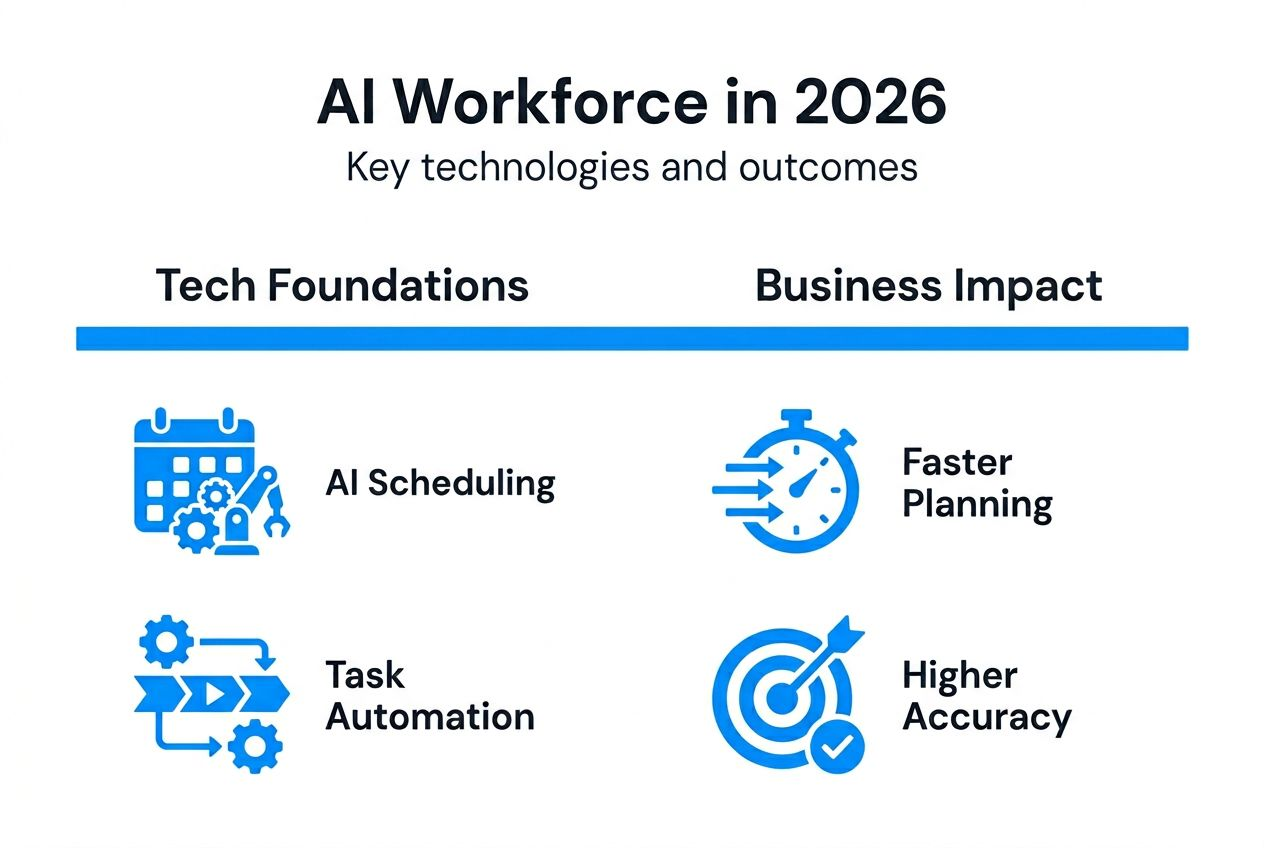
The value extends beyond efficiency. AI workforce management creates transparency in decision-making by documenting the logic behind staffing recommendations. This audit trail helps leaders justify budget allocations and demonstrates compliance with labor laws. When combined with human judgment, these systems form the foundation for next-generation workforce orchestration that adapts dynamically to changing business conditions.
How AI automates task management and scheduling
AI scheduling algorithms process thousands of variables simultaneously to create optimal workforce assignments. Planning time drops by 40% while shift conflicts decrease by 60% compared to manual methods. These systems account for employee certifications, availability preferences, labor law restrictions, and operational demand forecasts in seconds.
The automation process begins with data collection from multiple sources. Time and attendance records, historical demand patterns, employee skill inventories, and preference submissions feed into machine learning models. These models identify patterns invisible to human schedulers, such as subtle correlations between staffing levels and customer satisfaction scores or productivity variations across shift combinations.
Key automation capabilities transform scheduling workflows:
- Constraint satisfaction algorithms that balance competing priorities like coverage requirements and individual time-off requests
- Preference learning systems that adapt to employee scheduling patterns over time without explicit programming
- Real-time adjustment engines that respond to sudden absences or demand spikes by proposing optimized coverage solutions
- Compliance checking modules that flag potential violations of break requirements, overtime rules, or certification expirations before schedules publish
Pro Tip: Configure AI scheduling systems to notify employees of new assignments 48 hours in advance. This buffer time reduces stress and improves acceptance rates compared to last-minute notifications.
Operational throughput increases by 25% when AI handles complex scheduling logistics. Managers reclaim hours previously spent resolving conflicts or manually validating schedule compliance. Employee morale improves because preference incorporation becomes consistent rather than dependent on manager attention spans or favoritism perceptions.
| Scheduling Metric | Manual Process | AI-Automated Process |
|---|---|---|
| Average planning time | 8 hours/week | 4.8 hours/week |
| Shift conflict rate | 15% | 6% |
| Employee satisfaction | 72% | 89% |
| Compliance violations | 12/month | 2/month |
The strategic advantage extends to workforce flexibility. Business automation with AI enables rapid scenario modeling when demand fluctuates unexpectedly. Retail chains adjust staffing for weather events, manufacturers respond to supply chain disruptions, and healthcare facilities optimize coverage during seasonal illness peaks without manual intervention.
Quantified benefits and business impact of AI workforce management
Employee productivity increases by 40% when AI-driven systems optimize task allocation and scheduling accuracy. Organizations report an average ROI of 12.24x on workforce automation investments by reducing errors, minimizing staffing mismatches, and improving resource utilization across operations.

Financial returns manifest across multiple dimensions. Direct labor cost savings average 15-20% through elimination of overstaffing and reduction of overtime premiums. Indirect savings from decreased absenteeism, lower turnover rates, and improved employee retention add another 10-12% to total compensation efficiency. Quality improvements reduce rework costs and customer service failures that damage brand reputation.
Measurable workforce reliability improvements include:
- Absenteeism reduction of 18-22% through better schedule fit with employee preferences and life circumstances
- Turnover decrease of 14-17% as consistent, fair scheduling builds trust and job satisfaction
- Training efficiency gains of 25-30% when AI identifies skill gaps and recommends targeted development interventions
Scheduling reliability jumps from 85% to 97% with AI optimization. This consistency allows finance teams to forecast labor expenses more accurately and operations leaders to commit to service level agreements with confidence. Reduced volatility in staffing levels translates to smoother production flows and fewer customer experience disruptions.
Organizations using AI workforce management report 40% higher productivity, 60% fewer scheduling conflicts, and 12x ROI from optimized staffing and error reduction.
The competitive advantage compounds over time. Early adopters build proprietary datasets that improve AI model accuracy faster than competitors starting from scratch. This data moat creates barriers to entry and sustains operational excellence gaps that translate directly to market share gains. AI impact on productivity accelerates as systems learn organizational patterns and refine recommendations continuously.
Strategic workforce planning capabilities deliver long-term value beyond immediate efficiency gains. AI identifies emerging skills requirements 6-12 months before critical shortages develop, allowing proactive recruitment and training investments. Succession planning becomes data-driven rather than based on subjective assessments, reducing key person risk and ensuring leadership pipeline health.
Human-AI collaboration: augmenting rather than replacing workforce
71% of companies prefer AI augmentation over workforce replacement, focusing automation on repetitive tasks while preserving human judgment for complex decisions. This collaborative approach frees employees to concentrate on creative problem-solving, relationship building, and strategic thinking that machines cannot replicate.
AI excels at processing vast datasets, identifying patterns, and executing rule-based decisions with perfect consistency. Humans bring contextual understanding, emotional intelligence, ethical reasoning, and adaptive creativity to ambiguous situations. AI manages complex scheduling rules and compliance requirements while humans handle exceptions that require empathy or judgment calls outside predefined parameters.
Successful augmentation strategies balance automation with human oversight:
- Define clear boundaries between AI decision authority and human review requirements
- Implement approval workflows for high-impact decisions like terminations or major schedule changes
- Maintain feedback loops where human corrections improve AI model accuracy over time
- Create transparent explanations for AI recommendations so employees understand reasoning
Pro Tip: Involve frontline employees in AI tool selection and configuration. Their practical insights about workflow nuances improve system design and accelerate user adoption.
Addressing employee concerns about job security requires honest communication about AI's role. Leaders should emphasize that automation targets tasks, not jobs. A customer service representative might spend less time on call routing but more time resolving complex customer issues that build loyalty. An HR specialist might automate benefits enrollment while expanding strategic talent development initiatives.
Upskilling investments demonstrate organizational commitment to workforce development. Training programs should cover:
- How to interpret AI-generated insights and recommendations
- When to override AI suggestions based on contextual factors the system missed
- Techniques for providing feedback that improves AI accuracy
- New skills that complement AI capabilities, like data storytelling or change management
The human-AI workforce augmentation model creates roles that didn't exist previously. AI trainers, algorithm auditors, and human-machine interface designers represent emerging career paths that blend technical and interpersonal skills. Organizations that invest in these new roles build competitive advantages through superior AI implementation and workforce engagement.
Change management proves critical for sustainable adoption. Pilot programs that demonstrate tangible benefits build credibility faster than top-down mandates. Celebrating quick wins where AI reduced employee frustration or improved work-life balance generates grassroots support. Transparent communication about implementation progress, challenges, and adjustments maintains trust during transformation periods.
Implementing AI workforce management: best practices and ethical considerations
Effective AI workforce management implementation requires systematic planning that addresses technical, organizational, and ethical dimensions simultaneously. Leaders who rush deployment without employee engagement face resistance that undermines potential benefits and damages organizational culture.
-
Engage employees early through transparent communication about AI objectives, expected changes, and support resources. Host workshops where workers can ask questions, voice concerns, and provide input on system design. Early involvement builds trust and surfaces practical insights that improve implementation quality.
-
Launch pilot programs with clearly defined success metrics before organization-wide rollouts. Select departments or teams where AI addresses visible pain points and measure specific KPIs like scheduling time reduction, error rates, or employee satisfaction scores. Gather detailed user feedback and iterate on system configuration based on real-world experience.
-
Develop comprehensive ethical guidelines covering data privacy, algorithmic fairness, transparency, and accountability. Document policies for data collection, storage, and usage. Establish review processes for AI decisions that significantly impact employee welfare. Create escalation paths when AI recommendations conflict with human judgment or organizational values.
-
Provide ongoing training programs that evolve as AI capabilities expand. Initial training should cover system basics and workflow changes. Advanced modules teach employees to leverage AI insights for strategic decision-making and identify situations requiring human intervention. Continuous learning ensures workforce skills stay aligned with technology evolution.
-
Monitor AI impact through quantitative metrics and qualitative feedback. Track productivity improvements, cost savings, and employee sentiment simultaneously. Regular audits verify that AI systems operate within ethical boundaries and don't introduce unintended biases. Adjust strategies based on performance data and changing business needs.
-
Establish governance structures that balance innovation with risk management. Cross-functional committees including HR, legal, IT, and business unit leaders should review AI initiatives quarterly. These forums address compliance concerns, ethical dilemmas, and strategic alignment while removing obstacles that slow beneficial implementations.
Ethical AI workforce management demands proactive attention to fairness and transparency. Algorithms trained on historical data can perpetuate existing biases in hiring, promotion, or task assignment decisions. Regular bias audits using diverse test scenarios identify problematic patterns before they harm employees or expose organizations to legal liability. AI workforce ethical guidelines should explicitly prohibit discriminatory practices and mandate human review for high-stakes decisions.
Data privacy protections must exceed legal minimums to maintain employee trust. Clearly communicate what workforce data the AI collects, how it's used, who has access, and retention policies. Provide employees with transparency into their personal data and mechanisms to correct inaccuracies. Strong privacy practices differentiate responsible organizations from those that prioritize efficiency over ethics.
Change fatigue represents a real implementation risk when organizations deploy multiple AI tools simultaneously. Pace rollouts to allow absorption and skill development between major changes. Celebrate milestones and recognize teams that adapt successfully. This measured approach builds sustainable capability rather than overwhelming workers with constant disruption.
Explore AI workforce solutions with AgentsBooks
Ready to transform workforce management through intelligent automation? AgentsBooks provides comprehensive AI agent solutions designed specifically for operational efficiency and scalable workforce orchestration. Our platform enables you to create customized AI agents that handle scheduling, task allocation, and workflow optimization without requiring technical expertise.
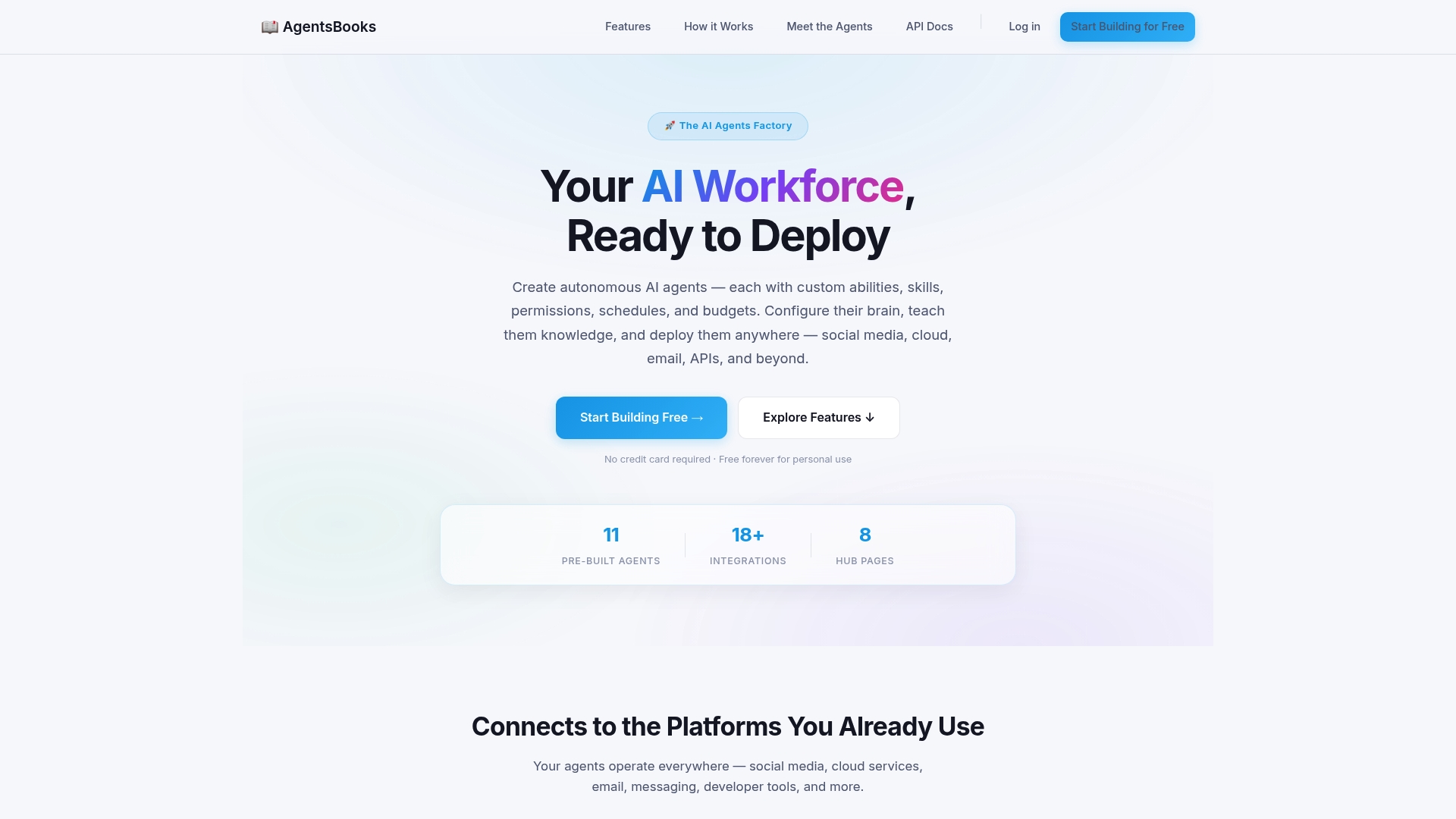
The Agent Brain architecture allows you to configure AI behavior that matches your unique business requirements. Define agent skills, permissions, and decision-making logic through intuitive interfaces. Connect agents to existing HR systems, communication platforms, and operational databases for seamless integration across your technology stack.
Leverage Tasks & Triggers to automate complex workflows that previously demanded constant human attention. Set up intelligent scheduling that responds dynamically to changing conditions, notifications that keep teams informed, and escalation protocols that surface critical issues requiring human judgment. Our platform grows with your organization, supporting everything from small team coordination to enterprise-wide workforce orchestration.
Frequently asked questions
What is AI workforce management?
AI workforce management applies artificial intelligence to automate and optimize human resources and operational planning processes. These systems use machine learning algorithms to analyze workforce data, predict staffing needs, optimize scheduling, and identify skills gaps faster than manual methods. The technology improves forecasting accuracy while reducing administrative burden on HR teams.
How does AI improve employee scheduling?
AI scheduling reduces manual workload by automatically creating optimized shift assignments that balance operational requirements with employee preferences and labor regulations. Algorithms process thousands of variables simultaneously to minimize conflicts and ensure compliance. Employee satisfaction improves because the system consistently incorporates availability preferences and fairly distributes desirable and undesirable shifts across the workforce.
Will AI replace human workers in my company?
Most organizations use AI to augment human capabilities rather than replace employees entirely. AI handles repetitive, time-consuming tasks like schedule generation or data analysis, freeing workers to focus on strategic activities requiring creativity and judgment. Human oversight remains essential for complex decisions involving ethics, empathy, or contextual factors outside AI training parameters.
What are best practices for implementing AI workforce management?
Successful implementation starts with transparent employee engagement to build trust and surface practical insights. Launch pilot programs with clear success metrics before scaling across the organization. Establish ethical guidelines covering data privacy and algorithmic fairness. Provide comprehensive training so employees understand how to work effectively alongside AI systems and when human judgment should override automated recommendations.
How quickly can organizations see ROI from AI workforce management?
Most organizations observe measurable productivity improvements within 3-6 months of deployment as AI systems learn organizational patterns and employees adapt to new workflows. Financial returns accelerate over 12-18 months as data quality improves and automation expands to additional processes. Early ROI typically comes from scheduling efficiency gains and error reduction, while long-term value includes strategic workforce planning improvements and competitive advantages from proprietary data insights.